Aug 25, 2026
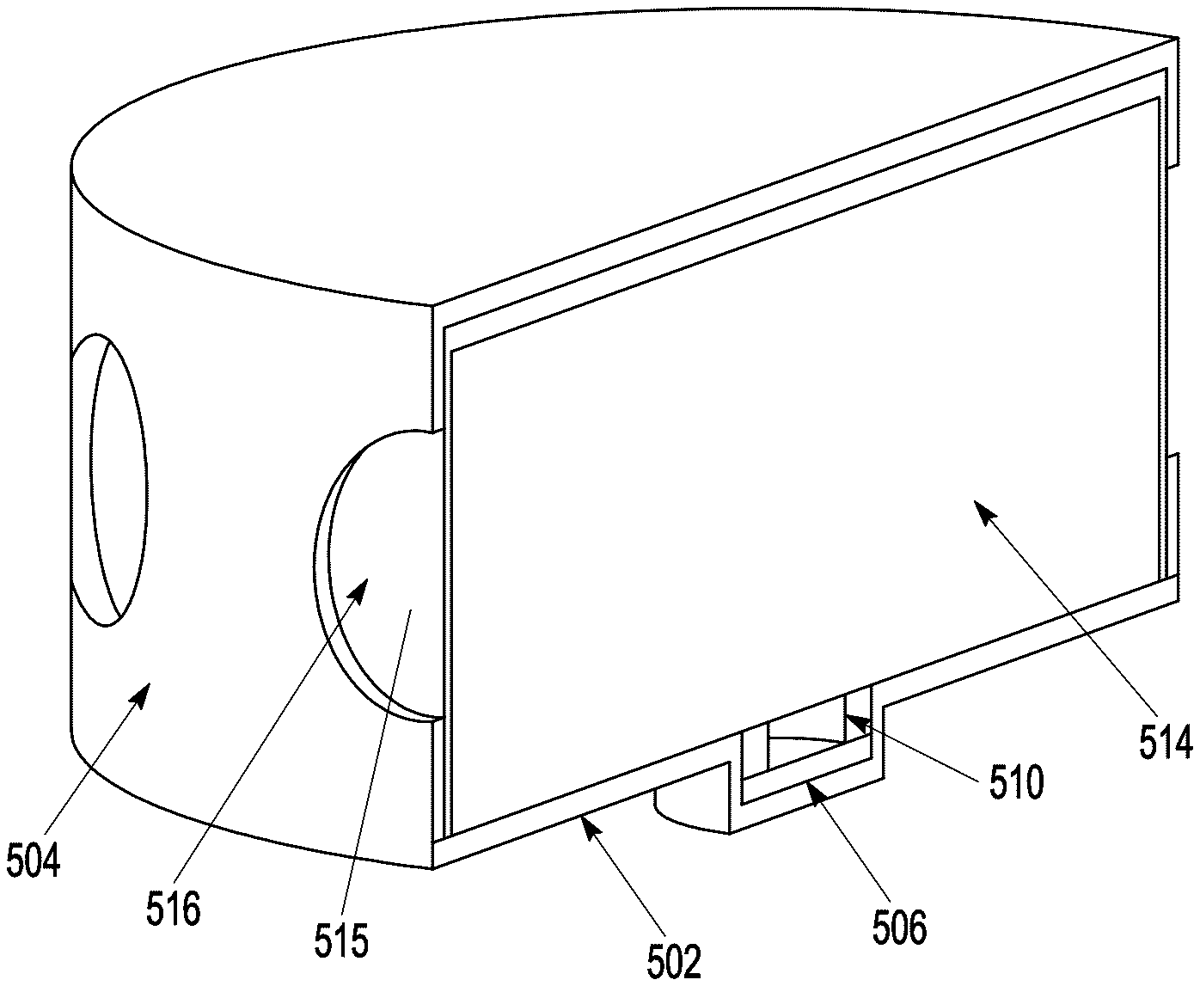
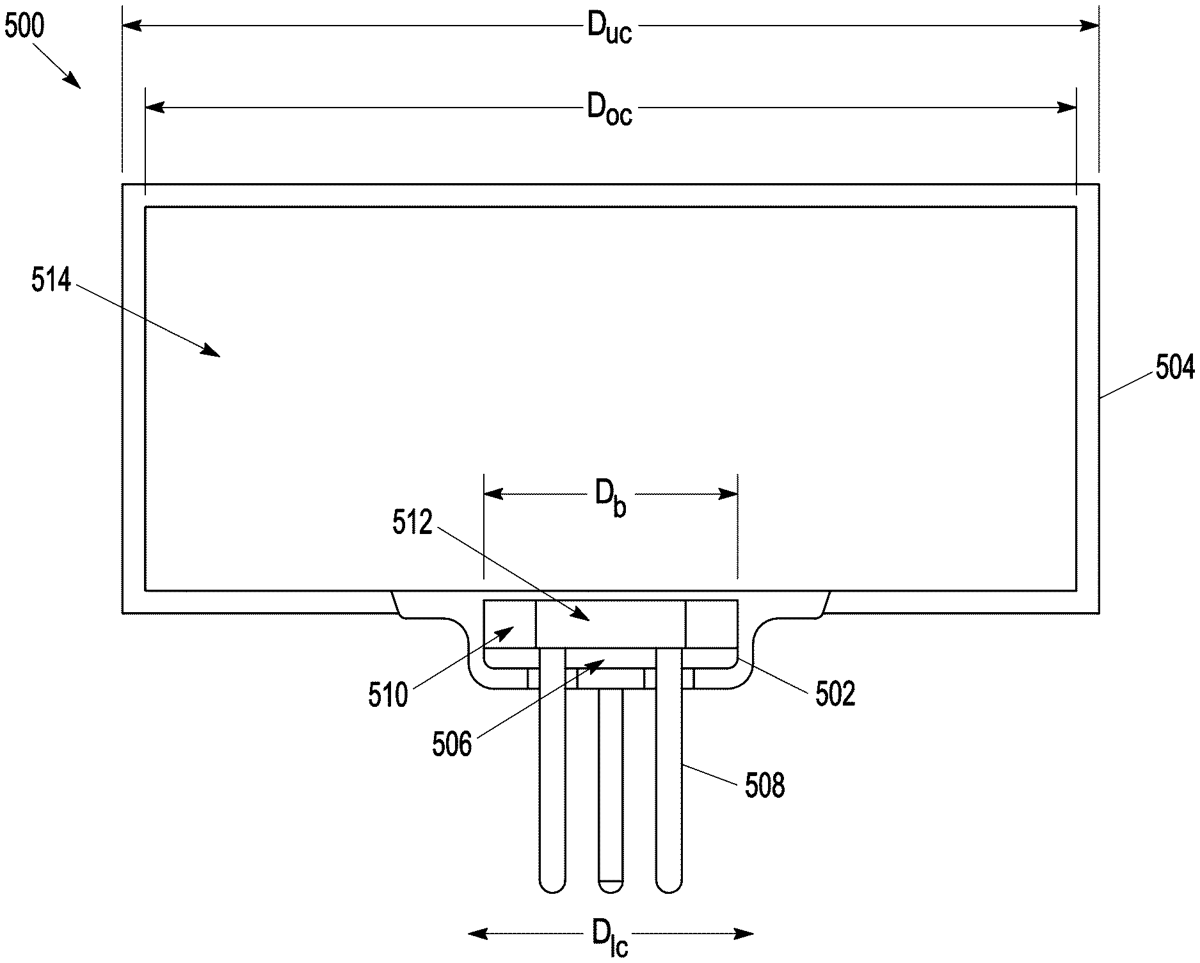
An EFI or LEEFI that provides enhanced detonation energy sufficient to directly detonate a main charge to improve the reliability and ease the qualification of an explosive firing train. This is accomplished by forming the EFI's output charge from an explosive material typically used as a booster explosive (e.g., PBXN-5, CH-6 and Composition A5) rather than a primary explosive and making the diameter of the output charge greater than the diameter of the barrel thus increasing the total mass of the output charge. For use in military grade munitions, the EFI's casing is formed with one or more vent holes radially adjacent the output charge.
Jul 14, 2026
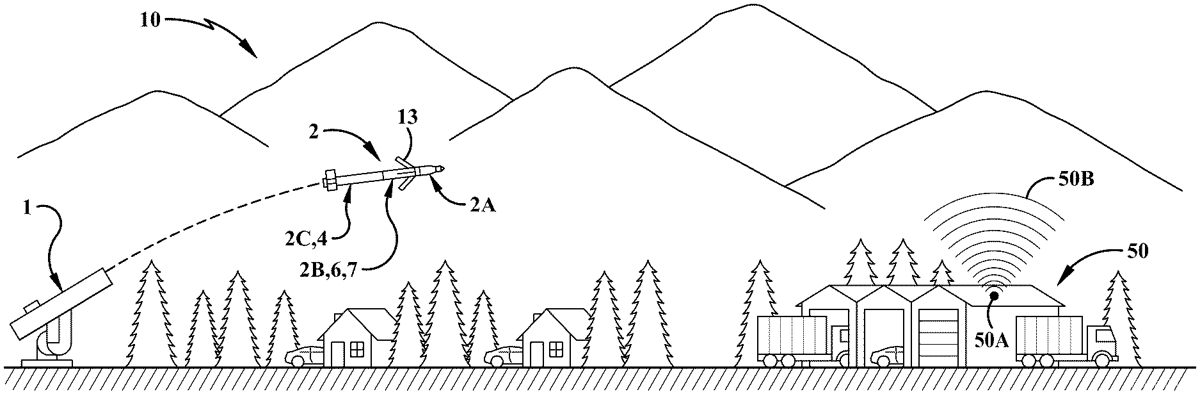
A modular radio frequency (RF) seeker may be modularly connected with a projectile having a diameter of about four inches or less. The modular RF seeker may have a plurality of RF antennas, wherein at least two RF antennas are spaced apart from each other at a distance that is less than one wavelength of a signal band of interest that is to be detected by the modular RF seeker. A modular connector that modularly connects with another portion of the projectile, wherein when modularly connected, the plurality of RF antennas are in operative communication with a guidance kit on the projectile that guides the projectile toward at least one signal jammer emitting a jamming signal at the signal band of interest.
Jun 30, 2026
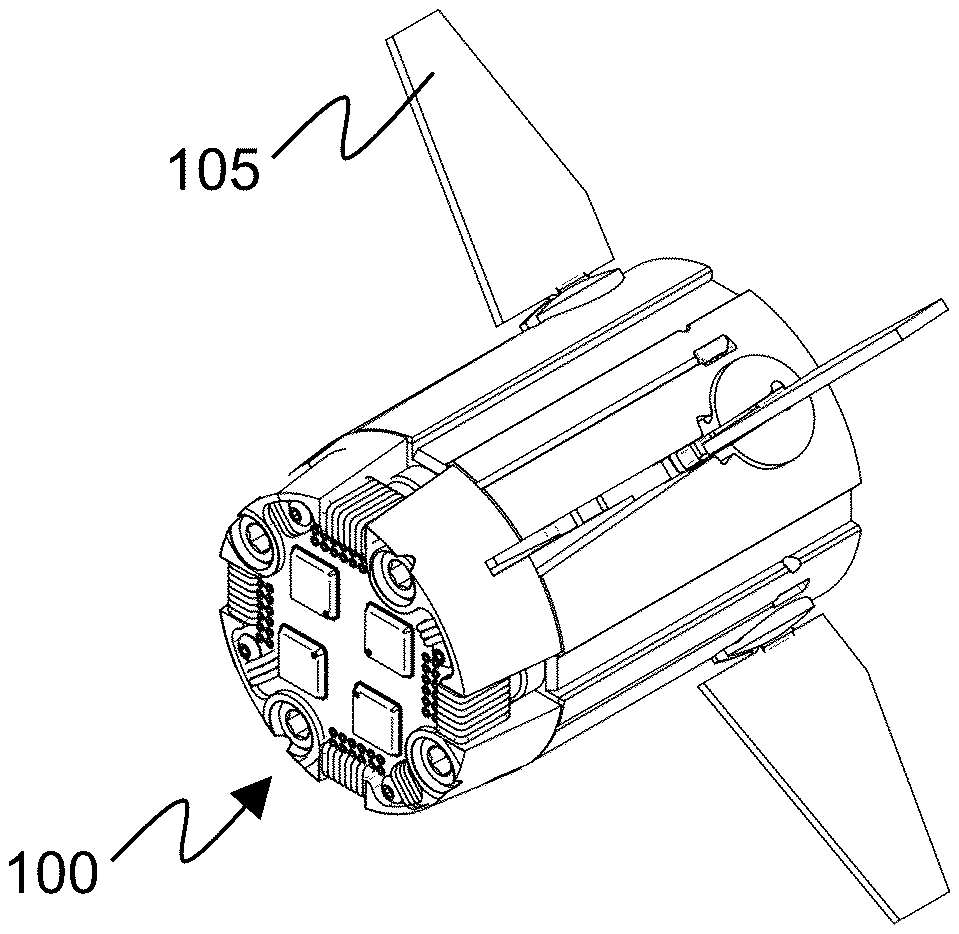
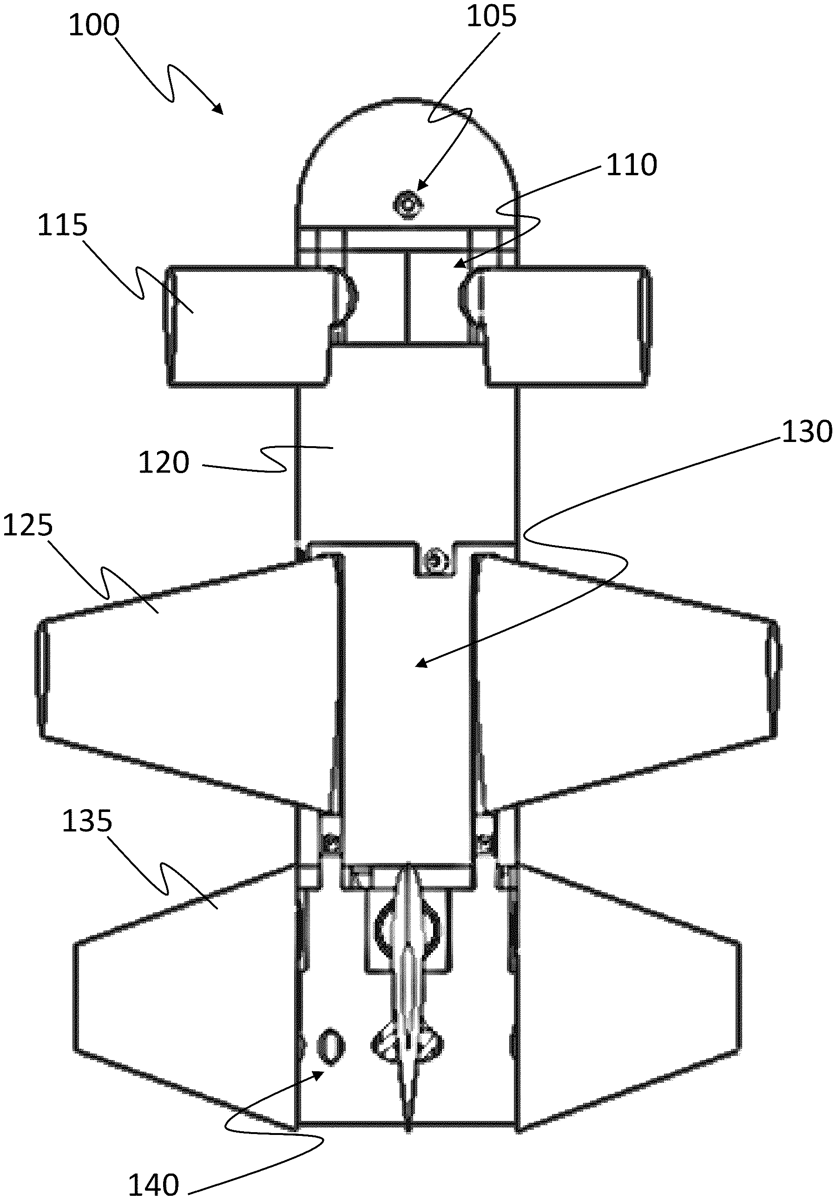
Systems and methods are presented for control of munitions, missiles and projectiles in flight and more particularly with the use of activatable or deployable flow effectors that remain stowed or inactive during launch or firing, and can be actuated after launch or firing on demand. More specifically, systems and methods are presented for control of munitions, missiles, and projectiles by activating and/or deactivating a control actuation system (CAS) based on measurements of an inertial measurement unit (IMU) and sensors integrated into such IMU, the IMU and sensors being at least part of a configurable guidance sensor suite (CGSS).
May 26, 2026
Unmanned systems, and primarily vehicles, and in most embodiments unmanned aerial systems (UAS), as well as novel guided and unguided munitions are presented herein. to the two combine to present unmanned weaponized systems that not only carry weapons functionality, but allow for advanced observation and reconnaissance. These unmanned systems are largely directed toward military applications where the weaponized unmanned system may be forward deployed to allow human warfighters to remain at long range distances from the potential targets, and to provide surveillance, target identification and tracking, general reconnaissance information, and the like, while also providing weaponized attack capabilities. The unmanned systems may, in some embodiments, include advanced command and control capabilities for communication between the system and the remote, rear-positioned warfighter, and between separate elements of the unmanned system. Many embodiments also include weapons systems, munitions, or rounds with guidance and real-time maneuverability capabilities as well.
May 19, 2026
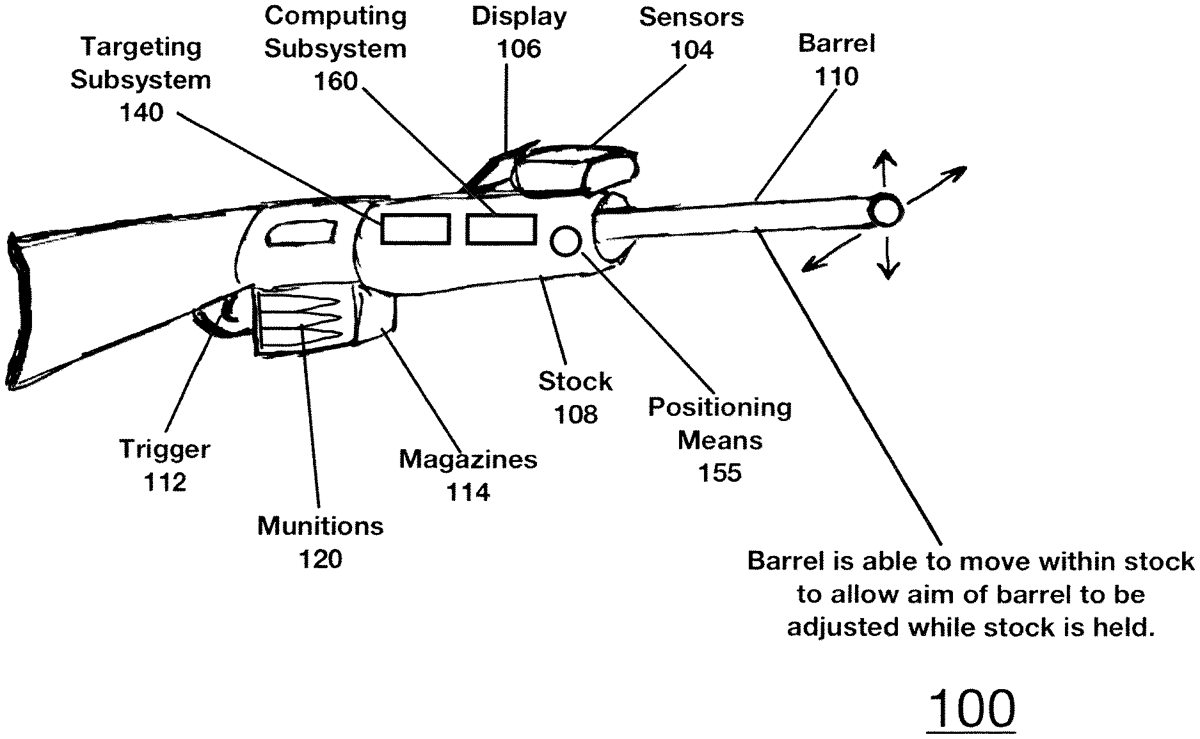
An automated weapon system is comprised of a human transported weapon comprising a barrel and munitions; sensing means; targeting means; computational logic for determining where to aim the human transported weapon; aim computational logic; firing activation means; and, firing means. The munitions can be aimed towards a targeting area to be propelled through the barrel. The sensing means senses which of up to a plurality of targets are within firing range of the automated weapon system. The targeting means selects a selected target from the targets in the targeting area that are within the firing range, responsive to the sensing. The computational logic determines where to aim the human transported weapon so that the munitions will hit the selected target if fired at a firing time. The aim computational logic adjusts the aim of the munitions through the human transported weapon, to compensate as needed for where the selected target is at the firing time, responsive to the determining where to aim. The firing activation means initiating firing of the munitions at the firing time. The firing means fires the munitions responsive to the adjusting the aim and the initiating firing.
Apr 28, 2026
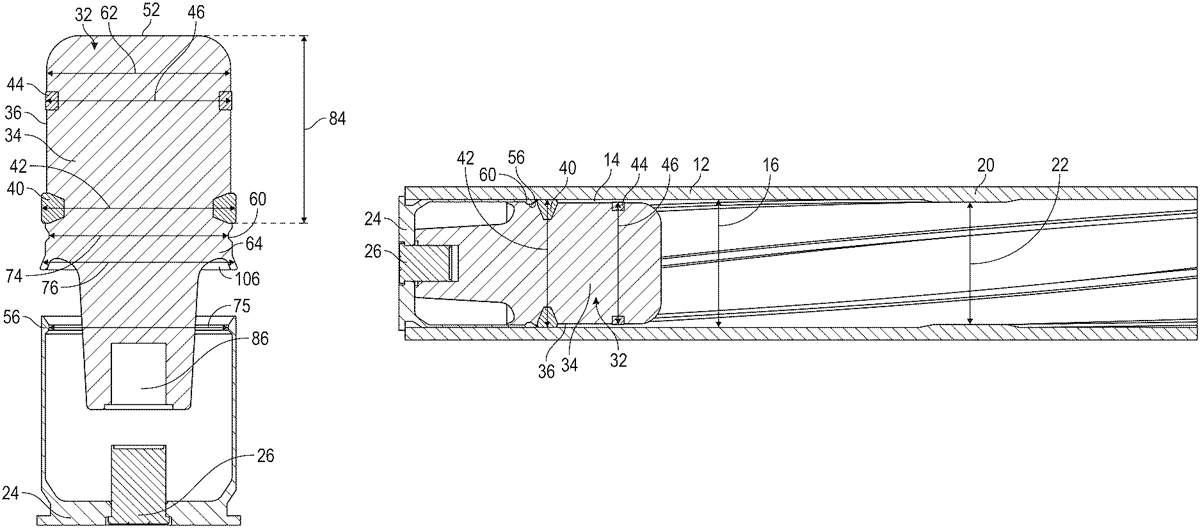
A blunt impact munition cartridge for firing from a barrel having grooves defining a first bore diameter and lands defining a lesser second bore diameter. The cartridge comprises a case that has a propellant and defining a forward case mouth, and an elastomeric projectile. The projectile has a body portion having a cylindrical sidewall configured to be closely received in the barrel. The projectile includes a first polymeric ring encircling the body portion and has a first ring diameter. The projectile includes a second polymeric ring encircling the body portion and having a second ring diameter different from the first diameter.
Apr 28, 2026
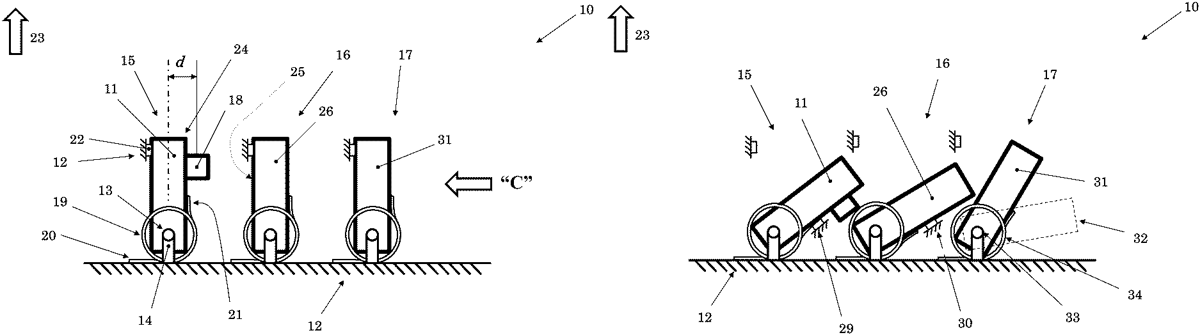
An inertial mechanical delay mechanism including: a first member rotatable about a first axis in a first direction. The first member having a first center of mass offset from a line parallel to a direction of acceleration and perpendicular from the first axis. A first elastic material exerts a first biasing force to the first member to bias the first member in a second direction. A second member is rotatable about a second axis in a third direction. The second member rotatable in a third direction by at least indirect interaction with the first member when the first member rotates a first angle in the first direction. A second elastic material exerts a second biasing force to the second member to bias the second member in a fourth direction. The first member is configured to rotate the first angle when the acceleration is greater than a predetermined magnitude and duration.
Mar 17, 2026
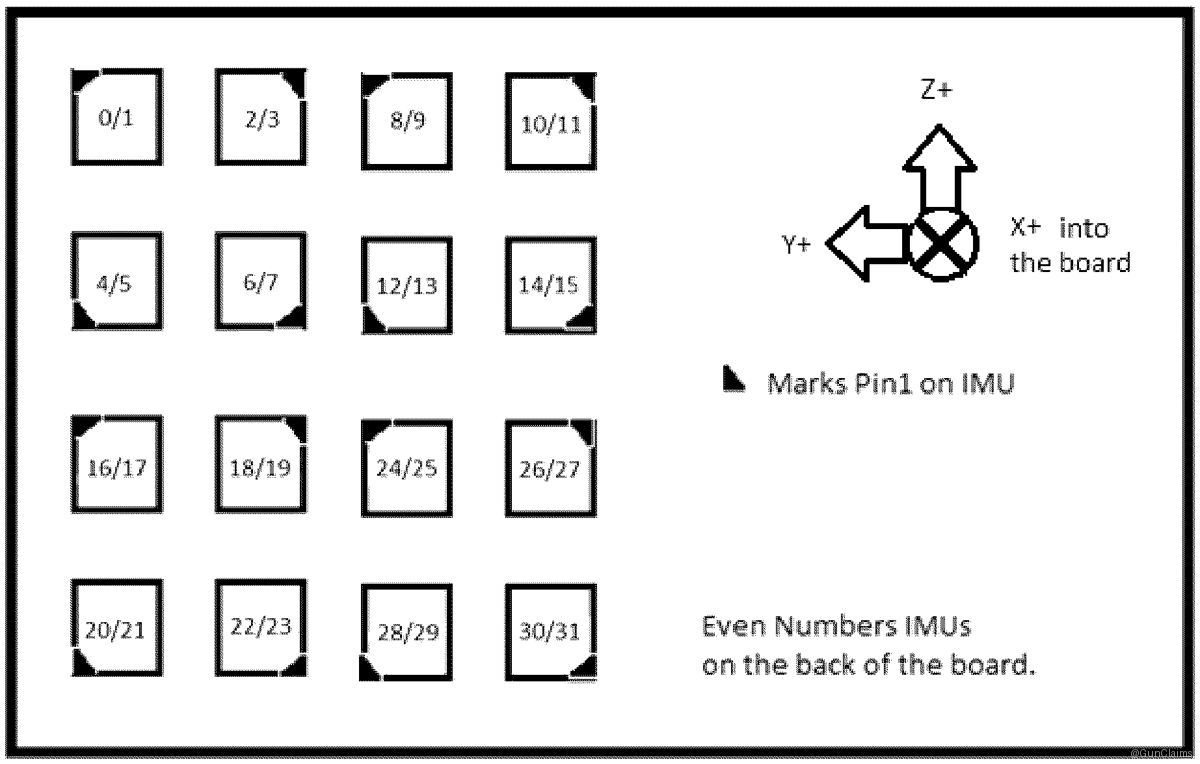
Presented herein are systems and methods using inertial measurement units (IMUs) for providing location and guidance, and more particularly for providing location and guidance in environments where global position systems (GPS) are unavailable or unreliable (GPS denied and/or degraded environments), and for such location and guidance being provided to projectiles, munitions, or rounds that are released, fired, or deployed from vehicles or weapons systems. More particularly, this disclosure relates to the use of a series of low-accuracy or low-resolution IMUs, in combination, to provide high-accuracy or high-resolution location and guidance results. This further relates to an electronics-control system for handing off control of the measurement and guidance of a body in flight between groups or subgroups of IMUs to alternate between high dynamic range/lower resolution and lower dynamic range/higher resolution measurement and guidance as the environment dictates.
Feb 24, 2026
An EFI or LEEFI provides enhanced detonation energy sufficient to directly detonate a main charge to improve the reliability and ease the qualification of an explosive firing train. This is accomplished by forming the EFI's output charge from an explosive material typically used as a booster explosive (e.g., PBXN-5, CH-6 and Composition A5) rather than a primary explosive and making the diameter of the output charge greater than the diameter of the barrel thus increasing the total mass of the output charge. The explosive firing train now requires only a single explosive transfer interface. For use in military grade munitions, the EFI's casing is formed with one or more vent holes radially adjacent the output charge.
Oct 21, 2025
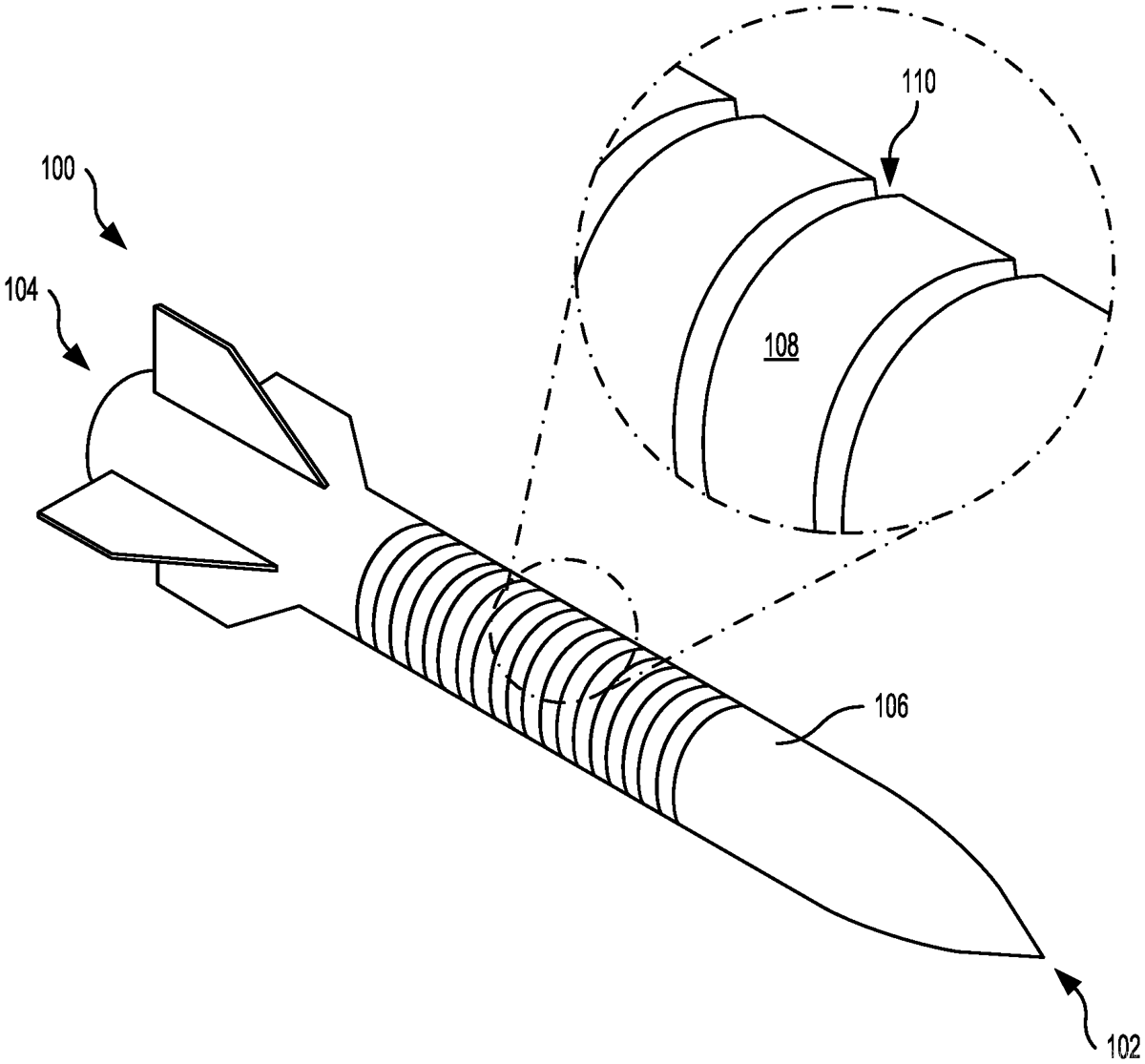
A bulk metallic glass (BMG) material includes at least one high strength reactive alloy having a surface on which one or more surface features are formed. The one or more surface features are configured to at least partially control a fragmentation of the BMG material. The BMG material forms a cavity within which an explosive is configured to reside.