Sep 8, 2026
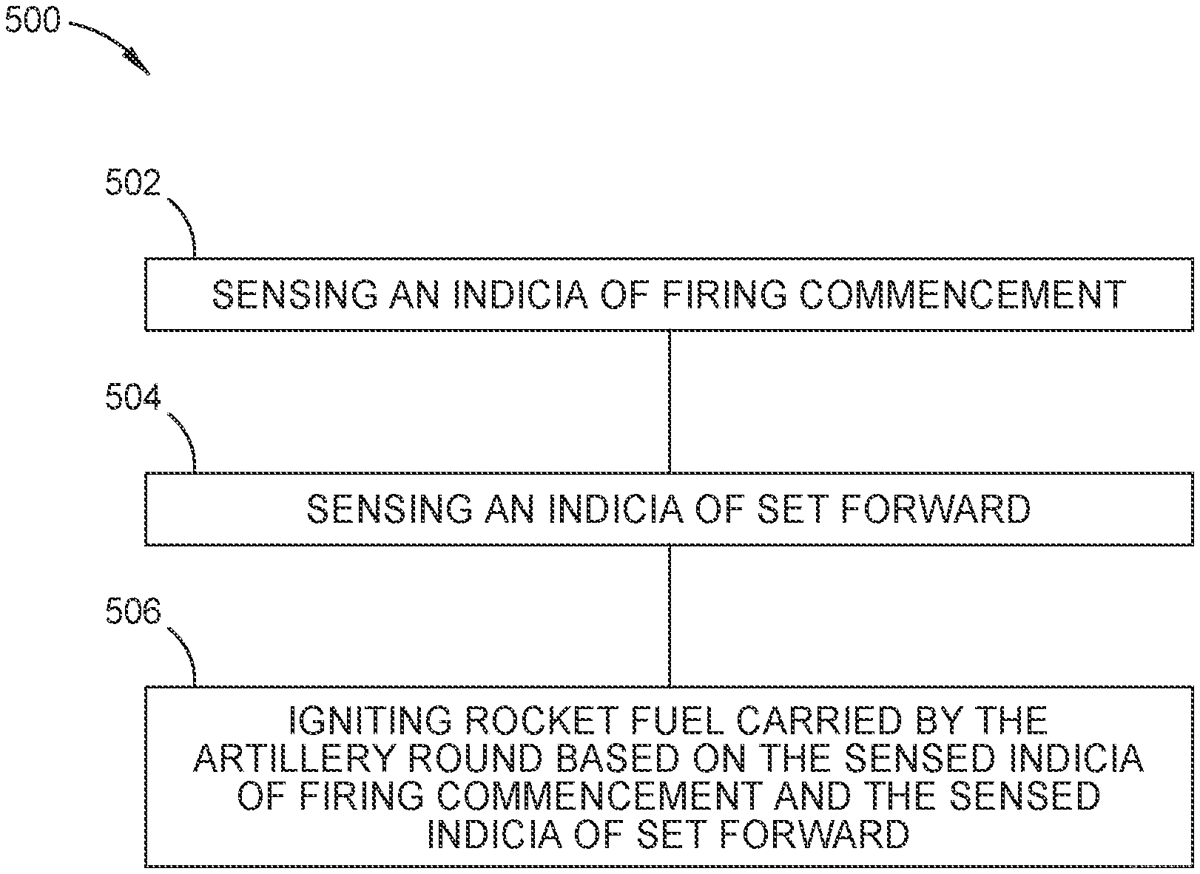
Rocket-assisted artillery rounds and methods for firing the same are described herein. In one example, a rocket-assisted artillery round includes a projectile body, rocket fuel disposed in the projectile body, an ignitor positioned to ignite the rocket fuel, and an ignition control system. The ignition control system includes a controller coupled to first and second sensors. The first sensor is configured to detect a first metric. The first metric is indicative of rotation of the projectile body. The second sensor is configured to detect a second metric. The second metric is indicative of setback of the projectile body. The controller is configured to output an activation signal to the ignitor based on the first metric and the second metric.
May 5, 2026
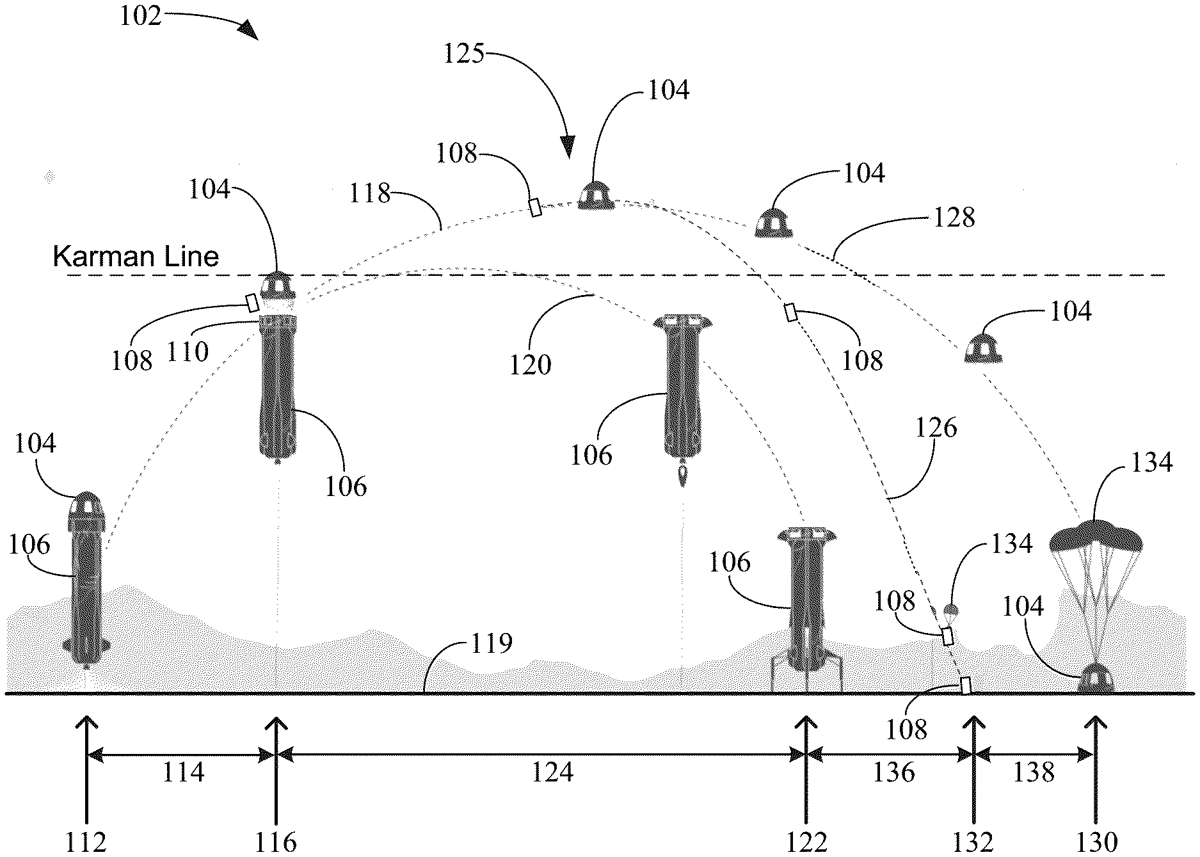
Systems and methods for photography of a spacecraft during space flight are provided. An autonomous deployable camera (ADC) is configured to capture images and video of a portion of a rocket, such as a crew capsule, as it flies in space with the Earth's horizon in the background and astronauts within the crew capsule visible and recognizable through windows of the crew capsule. The ADC, being reusable, is configured to land on the ground independent of landings or flight trajectories of the crew capsule or other parts of a rocket. The ADC includes a parachute to slow the descent of the ADC and tracking hardware to allow the ADC to be relatively easily recovered on the ground. After recovery, images are downloadable from the ADC.
Jun 17, 2025
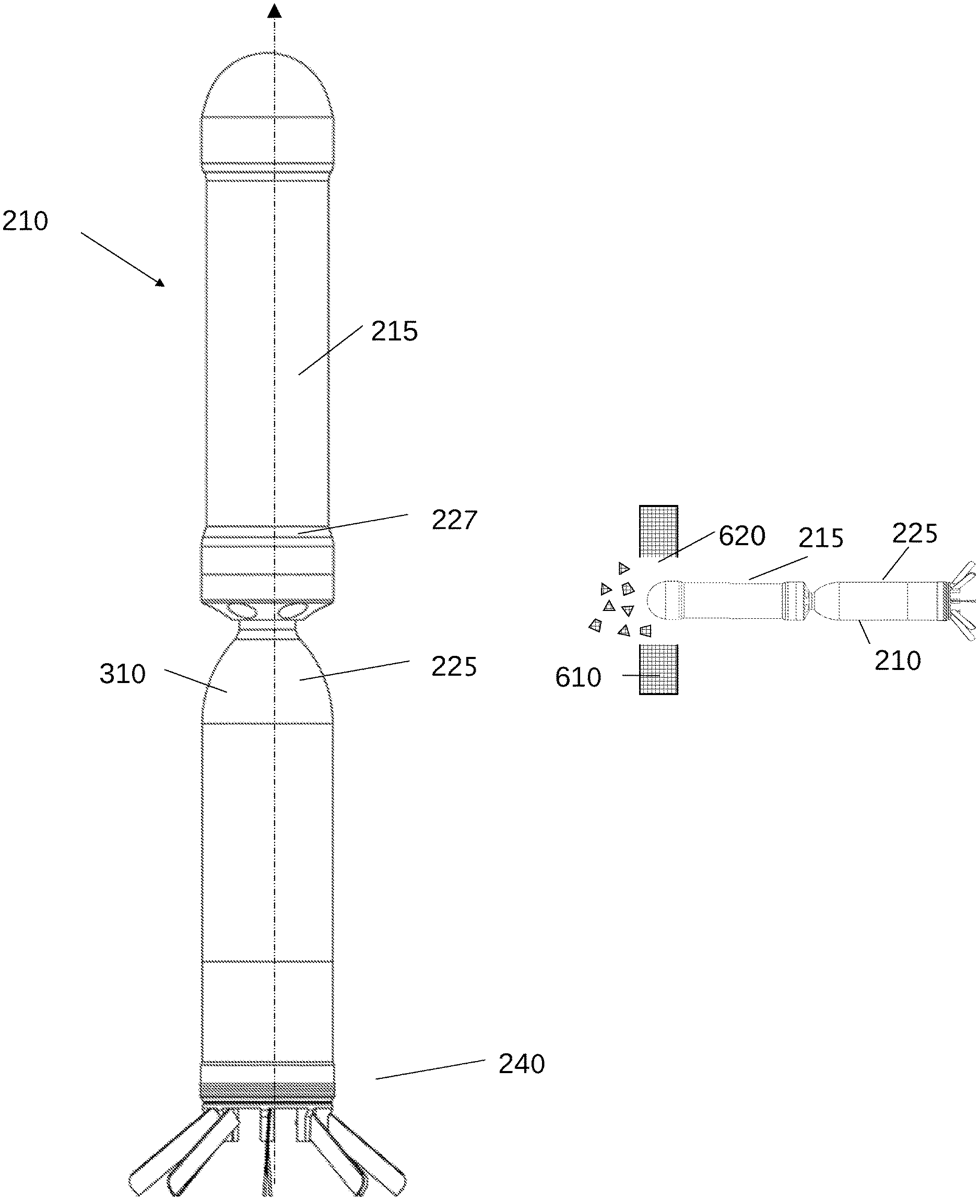
Flown munition that is rocket-propelled for hitting a target behind a barrier, and which comprises a rocket motor; and a successive payload that is mounted behind the rocket motor in a tandem configuration and is towed by it; and wherein the rocket motor is used for accelerating the munition towards the barrier and also serves as a sort of kinetic penetrator to clear a passage through the barrier for the successive pay load, which is connected to it and towed by it, and the successive payload (e.g.—a high-explosive charge) is adapted for delayed detonation following and just after said rocket motor hits the barrier.